Federal judge allows lawsuit against SpaceXAI to move forward
By: Jack Armstrong
A federal judge has allowed a lawsuit against SpaceXAI to move forward.
The lawsuit, brought by the NAACP, alleged SpaceXAI violated the Clean Air Act by operating unpermitted gas turbines in Southhaven.
U.S. District Court Judge Debra M. Brown for the North District of Mississippi delivered the decision in an Oct. 30 court filing.
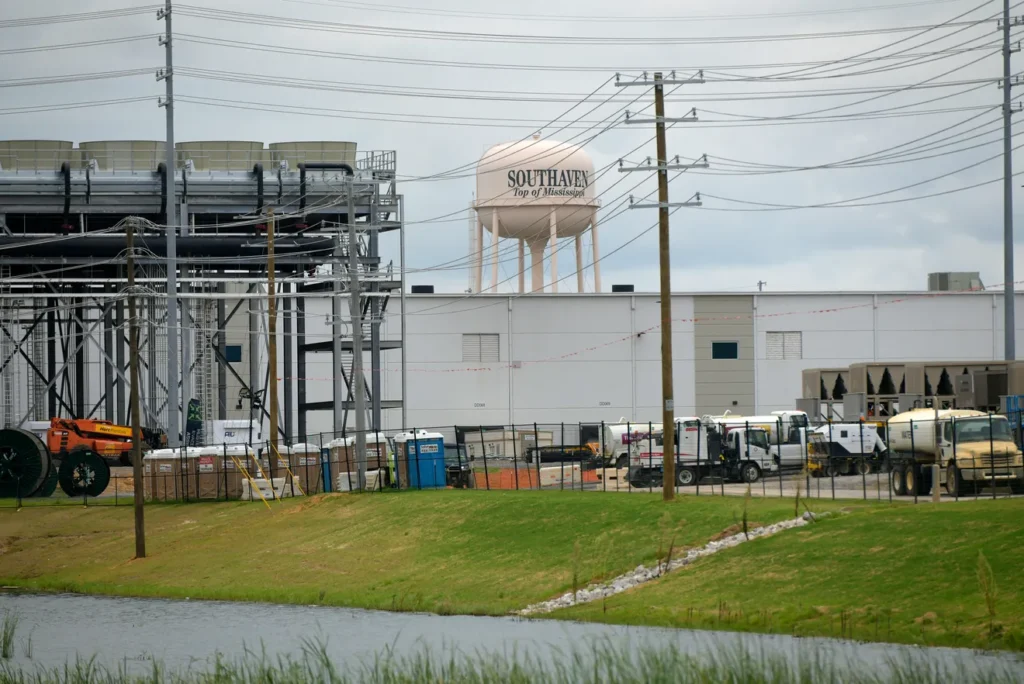
The lawsuit claims SpaceXAI illegally operated 27 turbines without a permit at its 2875 Stanton Rd. facility in Southaven. The site acts as the power supply for the Colossus 2 data center campus at 5420 Tulane Rd. in Memphis.
Abre’ Conner, NAACP Director of Environmental and Climate Justice, called the decision an “important victory” in an Oct. 30 press release from the Southern Environmental Law Center.
“The courts have repeatedly rejected attempts by xAI and the DOJ to dismiss the NAACP’s Clean Air Act case, affirming our right to pursue justice for communities impacted by pollution,” the statement read. “Our position has been clear: xAI cannot operate gas turbines without the required permits. Now that the motion to dismiss has been denied, we look forward to continuing to defend our position in court.”
The NAACP filed the suit April 14. SpaceXAI filed a motion to dismiss the lawsuit on June 15.

SpaceXAI claimed in part that the power plant is exempt from permitting requirements because the turbines are “mobile sources,” which are excluded from the construction and operation permitting requirements under Mississippi regulations.
But the judge found “mobile sources” must be a “motor vehicle, a nonroad engine or a nonroad vehicle,” and the turbines “clearly are not vehicles.”
The company also claimed the Clean Air Act’s “citizen suit” provision, which allows private citizens to sue when the Environmental Protection Agency and state agencies forego enforcement, is unconstitutional. Brown also rejected that claim.
About Post Author
